
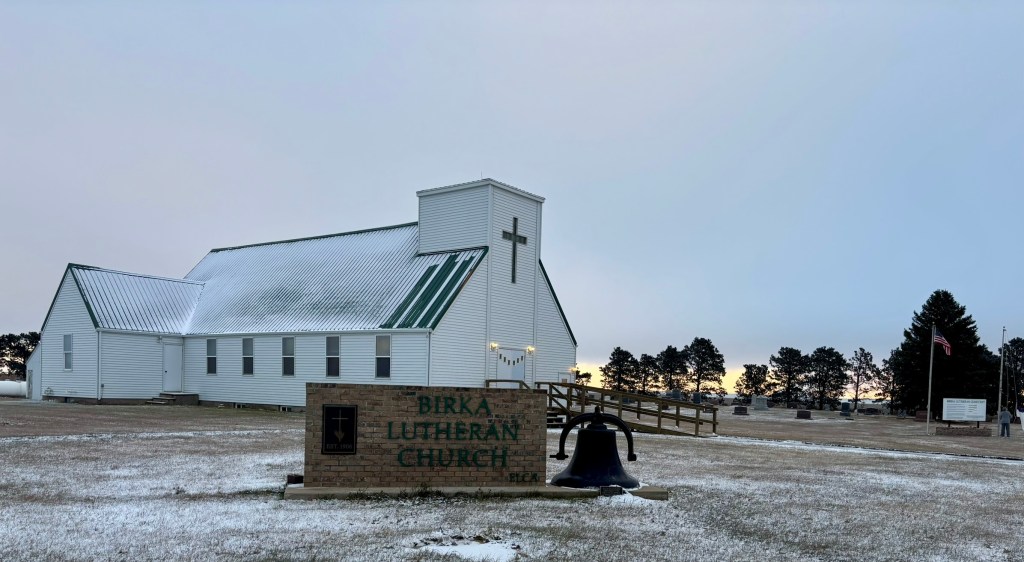
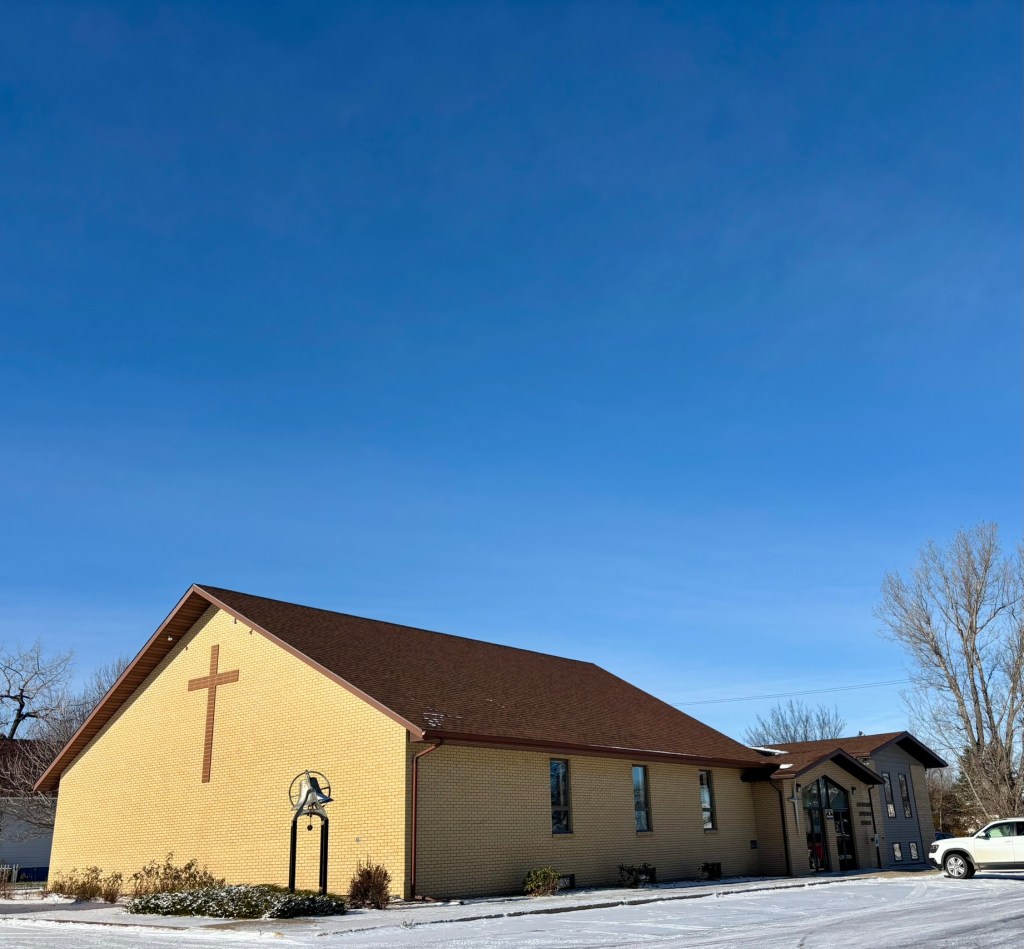
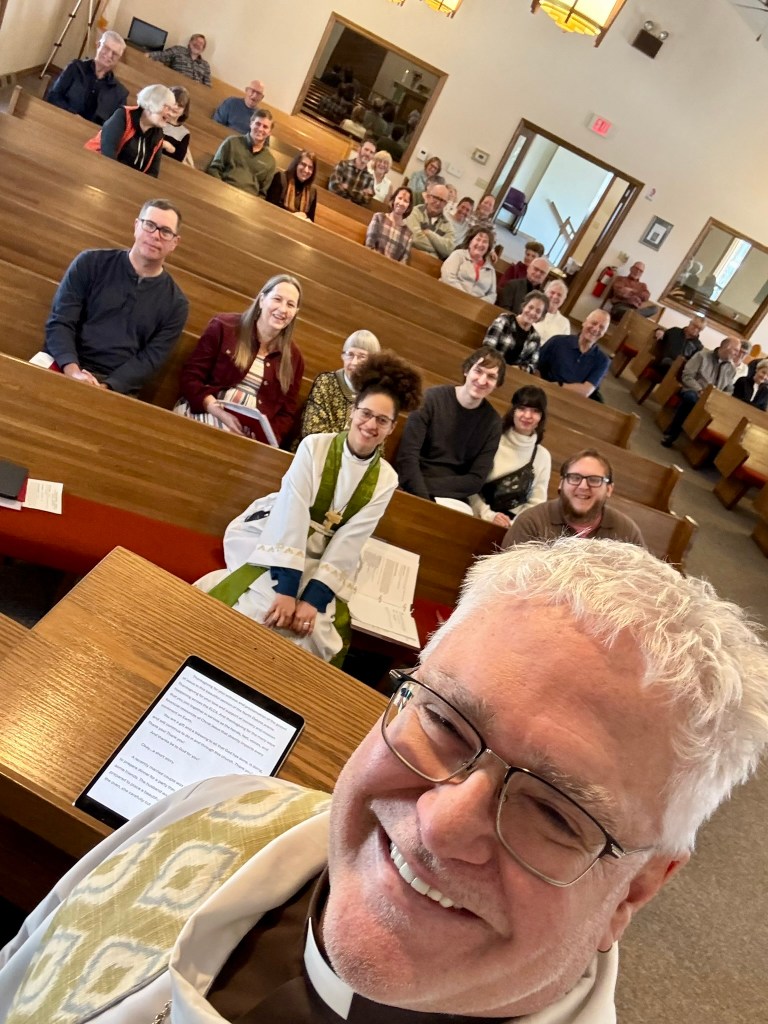
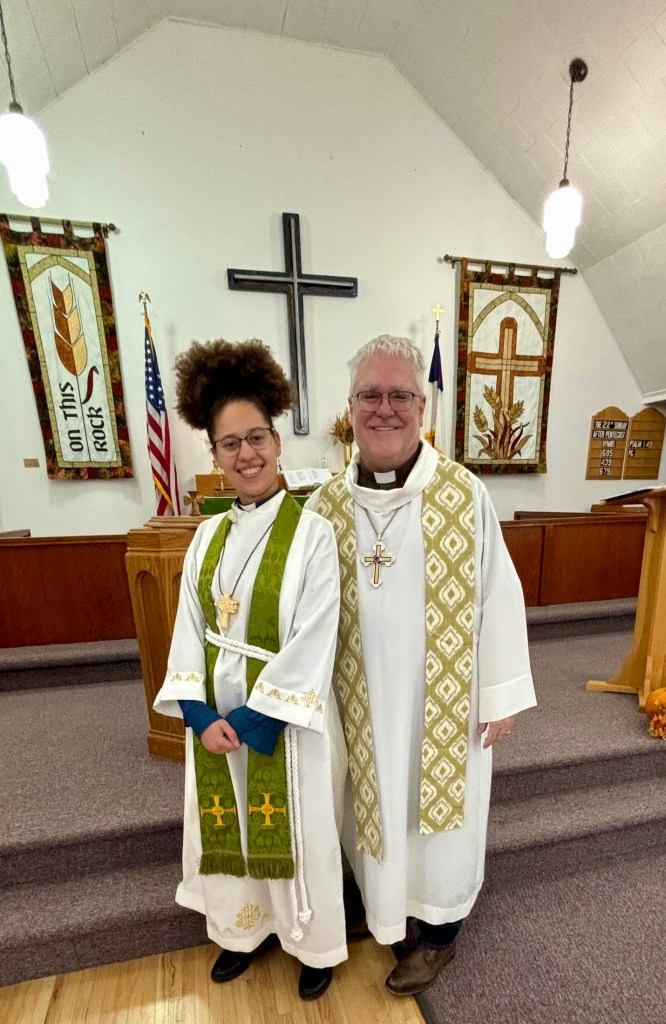
This sermon was shared with Birka Lutheran Church in Washburn, ND and Augustana Lutheran Church in Underwood, ND on November 9, 2025. We celebrated the installation of Pastor Giselle Loucks as she began serving as the parish’s pastor.
Sisters and brothers, friends in Christ, grace and peace to you from God our Father and our Lord and Savior Jesus, who is the Christ, the resurrected One. Amen.
First of all, it is so good to be with you this weekend, Birka and Augustana Lutheran Church. What a blessing to be in mission and ministry together. And today, we give God thanks and praise for the blessing that is your relationship with Pastor Giselle! I know she has been among you for some time already, but today, we make everything OFFICIAL! Praise God!!
Second, I offer my thanksgiving from your sisters and brothers across the 158 congregations of the Western North Dakota synod, the nearly 9,000 congregations of the Evangelical Lutheran Church in America, and the 150 Lutheran denominations that we are connected together globally in the Lutheran World Federation.
I offer those thanksgivings directly to you from the nearly 77 million Lutheran Christians that we are in relationship with around the world!
Thanksgiving for your witness and proclamation of the gospel of Jesus in this beautiful section of the North Dakota prairie. Thanksgiving for your love and support of ministry and mission happening across the ELCA. And thanksgiving for the many ways that you join together in service as the hands, feet, voices, and financial resources of Christ Jesus that directly impact every continent on Earth.
You are a gift and a blessing to all that God has done, is doing, and will continue to do in and through this church. Thank you! Thank you! Thank you!
And thanks be to God for you!
Okay…a short story.
A recently married couple was diligently working in the kitchen to prepare dinner for a party they were hosting that evening with some friends. The husband watched curiously as his bride prepared to place a beautiful ham in the oven. Before placing it in the oven, she carefully cut off both ends of the ham.
Her husband asked, “I’m no expert in cooking hams, but I don’t think I’ve ever seen anyone cut off the ends of a ham before cooking it. Why did you do that?
His wife answered, “You know what, I don’t know. I’ve never cooked a ham before, but that’s the way my mom always does it when she cooks one.” Now she was curious too, so she called her mom and asked.
“Now that you mention it, I don’t know why I do that,” her mother replied. “That’s just the way your grandmother always did it. Other than that, I honestly don’t have a clue.”
The plot thickened for the young couple. They had to get to the bottom of this mystery. Grandma was next on the list of calls.
“Well sweetheart,” her grandmother said, “the first oven we owned wasn’t big enough to put a whole ham in, so I had to cut the ends off to make it fit. After that, I guess it just became a habit!”
Can anyone else relate to this young couple and their ham cooking mystery?
Doing something without knowing why you are doing it, but you continue to do it anyway because that’s the way you’ve always done it before – regardless of whether it is the right thing to do or serves an actual purpose – it just became a habit so to speak?
On the surface, today’s gospel reading might sound like a difficult teaching about marriage or having children or widows or the ancient world view of women being less of a human than men – more like property that people.
As we dig into this a little, let’s remember a few things about the Sadducees. They are mentioned occasionally in the New Testament, often closely connected with the Pharisees. The major difference between the two, is that the Sadducees do not believe in life after death. The Pharisees did believe in the resurrection. The Sadducees get stuck on the resurrection of the dead because they only believed that the first five books of the bible were authoritative – the Torah or Pentateuch as we know them today. They were a conservative religious group who were among the religious elite. The upper class of religious people.
One thing that the Pharisees and Sadducees do have in common, even though they disagree on life after death, they did agree that this Jesus was a threat to their power and control over the temple and society and he needed to be stopped.
Here’s the thing: the Sadducees’ question to Jesus really has little to do with a hypothetical marriage problem between seven brothers and one woman and more to do with trapping Jesus. Since the Sadducees only view the Torah as authoritative, Jesus responds by showing them that Moses and his experience while speaking to God through a burning bush is actually a resurrection story. A resurrection story about a living God that Moses speaks to as the same God who is the God of Abraham, the God of Isaac, and the God of Jacob.
Jesus does not answer the question about who will be married to whom after they are dead. His response is about the resurrection of the dead and being named as children of God here and now.
The answer Jesus gives is about God, whose very presence means life.
His response is about God’s promise in the resurrection in the face of death, and about life in the face of and in spite of death.
Jesus is telling his first followers 2,000 years ago, and you and me today, that our God is a God of the living, not of the dead.
And if it isn’t enough to just hear about this truth in an ancient story from holy scripture during this time in worship, God also shows us this truth every single day in this life and world if we’re paying attention to it.
Last weekend, this congregation joined tens of thousands of other congregations around the world for All Saint’s Day worship. We lit candles of remembrance for saints who have died in the faith. We offered prayers of thanksgiving for saints who sit among us today and saints who will come into our lives in the future.
God of the living, not of the dead.
Or, how about every time we celebrate the sacrament of Holy Baptism or Holy Communion? In the sacred water and holy words of promise from God, we are received into the eternal family of all the saints in light. In the simple sharing of bread and wine – the real presence of Jesus among us, blessed by the promises of God, we are fed, nourished, and sent to be the hands and feet of the risen Christ Jesus in the world today.
God of the living, not of the dead.
Or how about the beauty of God’s creation on the North Dakota prairie that hearty deer hunters are experiencing during this weekend’s sacred and holy holiday know in our state as opening weekend for deer hunting. As these hearty souls enjoy God’s good creation and all that it has to offer, they see firsthand that God is a God of the living, not of the dead.
Or what about the gratitude and thanksgiving we will offer on Tuesday this week, with the far more important holiday than deer opener that honors those who have served and are currently serving in our country’s military. Veteran’s Day reminds those of us who live in the United States that our God is a God of the living, not of the dead.
Sisters and brothers in Christ of Birka and Augustana, you and I are children of the living God, regardless of how our family traditions teach us to cook a ham. And as children of the living God, as we seek to follow Jesus, we are invited every day to live our lives in ways that bring forth life.
Ways that bring forth life right now, today, rather than being consumed by worry about what happens when we die.
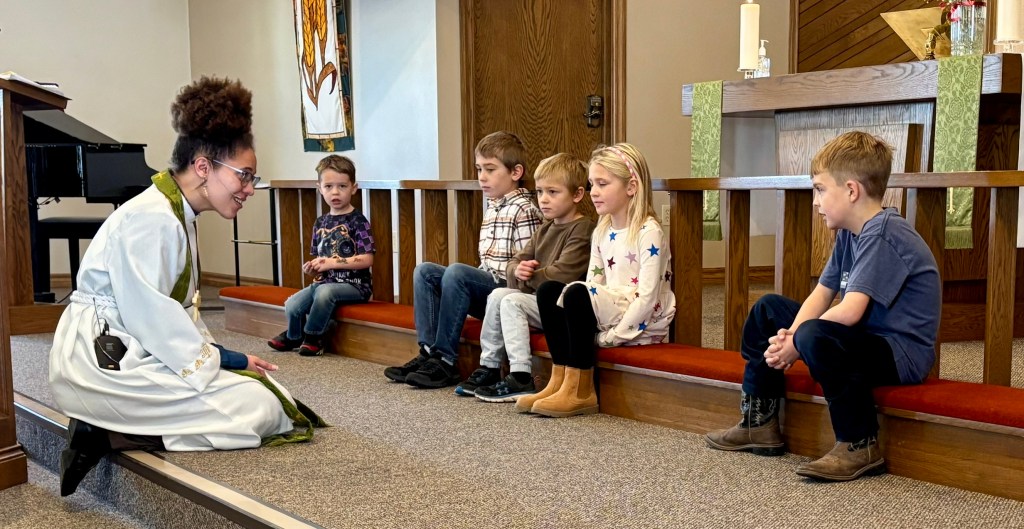
Ways that bring forth life as you continue to grow in your ministry and mission together as Pr. Giselle walks with and alongside you.
Our life together in Christ is always pulling us toward a resurrection that will happen one day when the Savior of the world returns and is already happening all around us if we are willing to allow ourselves to truly see it and experience its beauty.
The one true God that we worship and praise is always, and will be forever, about a relationship that leads to life. Amen.

 Bishop Craig Schweitzer