
John 16:12-15 • May 22, 2016
Brothers and sisters in Christ grace and peace to you in the name of the Holy Trinity – Father, Son, and Holy Spirit. Amen.
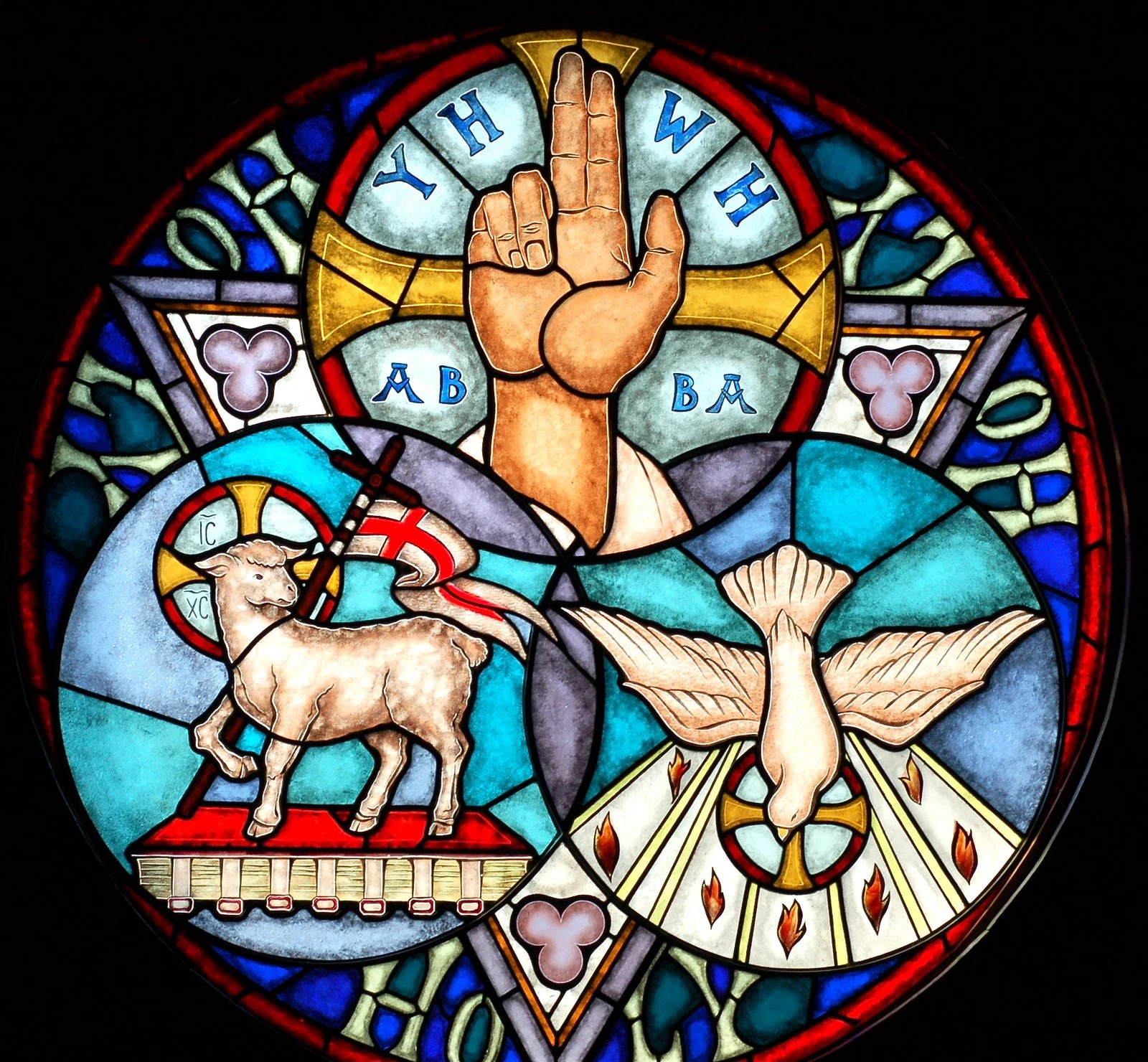 It is good to be with you again. Wendy and I were traveling last week to the annual ELCA Large Church Senior Pastor’s conference. It is a great week of conversation, continuing education and relationship building in some pretty spectacular ways. I’m grateful to be able to attend this event each year. And I’m grateful for the ways that it directly impacts our shared ministry together here at Good Shepherd.
Today is also one of those days in the church year when I’m glad to be part of a liturgical church. By liturgical church I’m not referring to the style of music that we use or if we place this worship time into the category of traditional or contemporary. Being part of a liturgical church is much bigger than that.
What I mean by that is … Good Shepherd Lutheran Church, a congregation of the Evangelical Lutheran Church in America, as a liturgical church we are connected deeply into relationship with other Lutherans and many other Christian denominations in Bismarck-Mandan, across our nation and around the world in very unique and powerful ways.
And one of the most significant ways that I’m thinking about today is through the scripture readings that are assigned for each week of the year and the festival days that we get to celebrate together. Believe it or not, Pastor Pam, Pastor Bob, or I do not choose these things. And for that we should all give God thanks and praise.
The readings and themes for our worship are the shared responsibility of millions of Christians joined together in relationship as brothers and sisters in the body of Christ. Relationships that extend FAR beyond whether or not we are Lutheran or Methodist or Roman Catholic. In fact, you can walk into nearly any Roman Catholic, Methodist, Presbyterian, Lutheran, or Episcopalian church in Bismarck today and hear the same scripture readings that you just heard and celebrate the same festival day that today is. The festival day and celebration of the Holy Trinity.
The idea…concept…doctrine…dogma of the trinity has been important to the church and to the life of followers of Jesus since its earliest days. It’s been celebrated as one of the most important festival days of the church since Pope John XXII first established the first Sunday after Pentecost as Holy Trinity Sunday in 1334. So, needless to say, your pastors  didn’t randomly decide to celebrate the Holy Trinity on May 22nd this year. For nearly 700 years, this day has been known as Trinity Sunday in the life of the Christian church.
So often, you and I think about the trinity on this day only in terms of Church doctrine. Or try in some strange way to think that we can fully understand or make complete sense of the theological meaning of the trinity within the confines of our human intelligence.
This year…on this day…what if you and I did something a little different. What if we thought for a few moments about the trinity not in terms of what it is in theory or doctrine or theology, but what it looks like in action or what it does in and through the life of followers of Jesus? The fact is that things have been happening in the world through the trinity since the very beginning of creation. In the very earliest days of the Christian movement. And most importantly, still today through the church in 2016.
One of my favorite books on the Holy Trinity is called God for Us: The Trinity and Christian Life by Catherine LaCugna. In it she writes, “God moves toward us so that we may move toward each other and thereby toward God. The way God comes to us is also our way to God and to each other: through Jesus Christ by the power of the Holy Spirit. This is our faith,” LaCugna writes, “confessed in creed and celebrated in sacraments.” [pg. 377]
The more I grow in relationship with brothers and sisters in Christ and with God, the more deeply I believe that the Holy Trinity has a lot more to do with how God relates to God’s creation and not simply a way of trying to explain how God is. LaCugna’s statement that, “God moves toward us so that we may move toward each other and thereby toward God.” is a powerful reminder of what I believe it means to be in relationship with God through the Holy Trinity.
 I think of seven-year old Jimmy standing on the edge of the Grand Canyon with his mouth wide-open in awe. Finally, the words came to him, “Mommy, this is awesome! God did a great job creating this!”
God moving toward us.
I think of seventeen-year old Crystal walking into the sanctuary for the first time with her best friend. She was excited to finally see the inside of a church, but didn’t understand the things she saw. She seemed to be most curious about the crosses. Crystal asked her friend, “What’s up with all of these crosses? Why are they even here?” Two questions that her best friend was able to answer by sharing the story of Jesus. By the end of the story, Crystal quietly replied, “I’ve never hear a story that amazing before!”
God moving toward us.
 I think about seventy-seven year old Matthias who was having a rough day filled with loneliness in the nursing home when a home communion visitation team from his church stopped by to visit. One read from scripture, one offered prayer, and the three shared in the sacrament of Holy Communion. By the end, Matthias was encouraged and strengthened, feeling the power of God in the room. As the home communion visitation team members left his room, Matthias said, “How did you know I needed this today? Thank you Jesus!”
God moving toward us.
 Or I think about the conversations I had last week with my friend Daniel Speckhard. Dan is the President and CEO of Lutheran World Relief. During one of our conversations, Dan said, “Give a big hug to all those quilters at Good Shepherd. They are the heart and soul of Lutheran World Relief.” To which I replied, “I know. And I give God thanks and praise for them every day too!”
God moving toward us.
 In today’s gospel reading, we hear Jesus say to us “When the Spirit of truth comes, he will guide you into all the truth; for he will not speak on his own, but will speak whatever he hears, and he will declare to you the things that are to come.”
Brothers and sisters in Christ, the spirit has come and continues to come into our lives and into the world God loves and blesses abundantly through Jesus Christ, the savior of the world.
God is always moving toward us.
 On this day in which we celebrate the gift that is the Holy Trinity, I invite us to boldly and confidently say thanks be to God for the gift of the Trinity. The gift of relationship with God in the name of the Father, Son, and Holy Spirit. Amen.
 First – Simon Peter fishing naked. I don’t fish, but I know many people who do. And as far as I know, none of them fish naked. Like I said, as far as I know. I can’t actually assume to know the proper way to dress or not dress when fishing. And did you catch what Peter does when he hears about Jesus on the shore. He puts his clothes back on and THEN he jumps in the water to swim to shore. Wouldn’t it have been easier to swim to shore without the weight of wet clothes? Or maybe easier to just stay in the boat and get to shore with the other disciples that stay in the boat and at the same time stay dry?
 I have no idea what the daily limit on walleye is in
  In Luke’s gospel Jesus opens the disciples minds to understand the scripture and says, “Thus it is written, that the Messiah is to suffer and to rise from the dead on the third day, and that repentance and forgiveness of sins is to be proclaimed in his name to all nations,”
 The abundance of the resurrection is what you and I are being called to share today. An abundance of grace and unconditional love that extends beyond our wildest imaginations. An abundance of mercy and forgiveness that will break down every wall of sin and fear and hatred and exclusion that we try to build. 20th century Trappist monk Thomas Merton said that, “Our job is to love others without stopping to inquire whether or not they are worthy. That is not our business. What we are asked to do is to love.”
 Bishop Craig Schweitzer