
Click here to hear the audio recording of this sermon.
John 2:13-22 • March 11, 2012
 Brothers and sisters in Christ grace and peace to you from God our Father and our Lord and Savior Jesus. Amen.
I wonder what the temple must have looked like after Jesus finished his tirade. I bet it was a dusty, dirty mess. Does Jesus swinging whips and flipping tables over fit with your image of him?
What is your “image” of Jesus? In other words when someone says to you, “Jesus”, what do you see? When you think about Jesus, what picture comes to your mind?
Hold on to that image for a little while.
Today’s gospel reading from Saint John is commonly referred to as the cleansing of the temple. All four gospels share this text, but John treats it quite differently. In John, it’s near the very beginning of his narrative about Jesus. In John, Jesus spends a lot more time in Jerusalem. And not just casually visiting the city, but going to the temple. And not just going to the temple on ordinary days, but going to the temple during major Jewish festivals. Like Passover.
It’s estimated that the population of Jerusalem would swell from 50,000 to 180,000 people at Passover. Pilgrims would come from as far away as Persia, Syria, Egypt, Greece, and even Rome.
Think about it like this. I’m assuming that most of you are aware that its high school tournament season in North Dakota. Imagine that Bismarck is hosting the State Class A and B boys and girls basketball tournaments, the girls and boys state hockey tournaments, and all of the state swimming, diving, speech, dance, music and theater events at exactly the same time. And these events don’t only last one day; they take place over the span of an entire week! That’s a lot of people to feed who also need a place to sleep.
When the pilgrims came to Jerusalem for the Passover, they didn’t just need places to eat and sleep, they also needed to offer an animal sacrifice and pay the temple tax. That’s a lot of unblemished animals to have readily on hand and the ability to change an incredible amount of money from dozens of different currencies into the currency that was accepted in the temple. Get the picture? The impact, economically and physically, that Passover brought to every facet of life in Jerusalem was significant.
But it wasn’t only an economic impact, it was also a spiritual one. For Jews, the Temple was the place where the presence of God existed.
Theologian N.T. Wright calls the temple the beating heart of Judaism.
And Dr. Matt Skinner says that, “The Jerusalem temple was hardly one sacred site among many for those who worshiped there early in the first century. Here was the place, they believed, where God was most present.”
It’s significant that our gospel story today comes at the  beginning of John’s gospel, because it reveals a very dramatic image of Jesus and how John uses that image to show us Jesus’ identity throughout his gospel. But before we think too much about that image, let’s back up a little. Recall with me the opening words of John’s gospel that set the stage for John’s image of Jesus – “In the beginning was the Word, and the Word was with God, and the Word was God.”
Let’s journey a little further into that first chapter. In verse 14 John writes, “And the Word became flesh and lived among us.” Or as Eugene Peterson offers in his paraphrase of scripture called The Message, “The Word became flesh and blood, and moved into the neighborhood.”
The New Testament has two Greek words that are often translated into the English word, “temple.” In the 14th verse of our gospel today, where Jesus finds the moneychangers and people selling sheep, cattle and doves, the Greek word there (ieros) refers to anything that belongs to the temple, not the temple building itself. It usually refers to the temple precincts or the area around the temple, although this area is probably within the temple walls.
As we move a little further into the text, the 21st verse is where Jesus calls the temple his body. The Greek word there (vaos) is the actual temple. In essence, what Jesus is saying is that if we are looking for God, we should no longer look inside of a building. We simply need to look at Jesus.
In a dramatic display of emotion that has little to do with what our images of Jesus commonly are, Jesus declares that the temple can no longer function in the same way that it has always functioned. The temple, from the gospel of John’s point of view, is gone and will never again be the same.
In the ancient Jewish tradition and world the temple was the place where you could find the presence of God. Jesus takes those traditions and points of view and places them on himself. He is the reality that the Temple itself points. His death and resurrection will be the reality to which the whole Passover celebration points. [N.T. Wright, John for Everyone, Part One, pg. 26]
So if that is true, why do we still expend incredible amounts of energy wondering where the promise of God’s presence is? God’s presence in ancient Jewish life was in the Temple. In today’s gospel reading, Jesus reveals that God’s presence was now in him. And after the resurrection, God’s presence is wherever two or three are gathered in his name.
Clearly in the gospel of John, Jesus is the Temple-in-person, the place where Israel’s God has come to dwell in fulfillment of God’s ancient promise.
I’m not su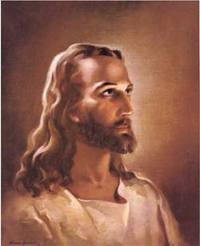 re that I believe Jesus anger in the temple is only because of what’s happening – exchanging money and selling animals to be sacrificed. I think Jesus is angry and turns the temple upside-down because he wants everyone to understand that what they are doing is completely and totally unnecessary because of his arrival in the world.
Whatever image that you have of Jesus – whether it’s the masculine and well groomed supermodel looking Jesus who probably lives in a condo in upstate Michigan;  or the gentle shepherd Jesus keeping watch over his flock in the field; brothers and sisters in Christ, don’t forget that it’s also OK to see Jesus flipping over tables and getting a little ticked off from time to time.
The images of Jesus that you and I are given in the gospels strengthen us, guide us, challenge us, and send us into the world to be the hands and feet of Jesus. Right now. Today.
There’s a powerful statement of this mission that we are called to live out on the homepage of the Evangelical Lutheran Church in America, the denomination that Good Shepherd is part of. It speaks very directly to our image, or rather images, of Jesus.
Here’s what it says, “We are a church that shares a living, daring confidence in God’s grace. Liberated by our faith, we embrace you as a whole person – questions, complexities and all. Join us as we do God’s work in Christ’s name for the life of the world.”
As followers of Jesus, we need to remember each and every day that Christ is the center of everything. That Jesus Christ is our temple.
And I do not believe that the dust in this temple has settled yet. I hope and pray that it never will. Amen.

 Bishop Craig Schweitzer